

Systemic Sclerosis (SSc)

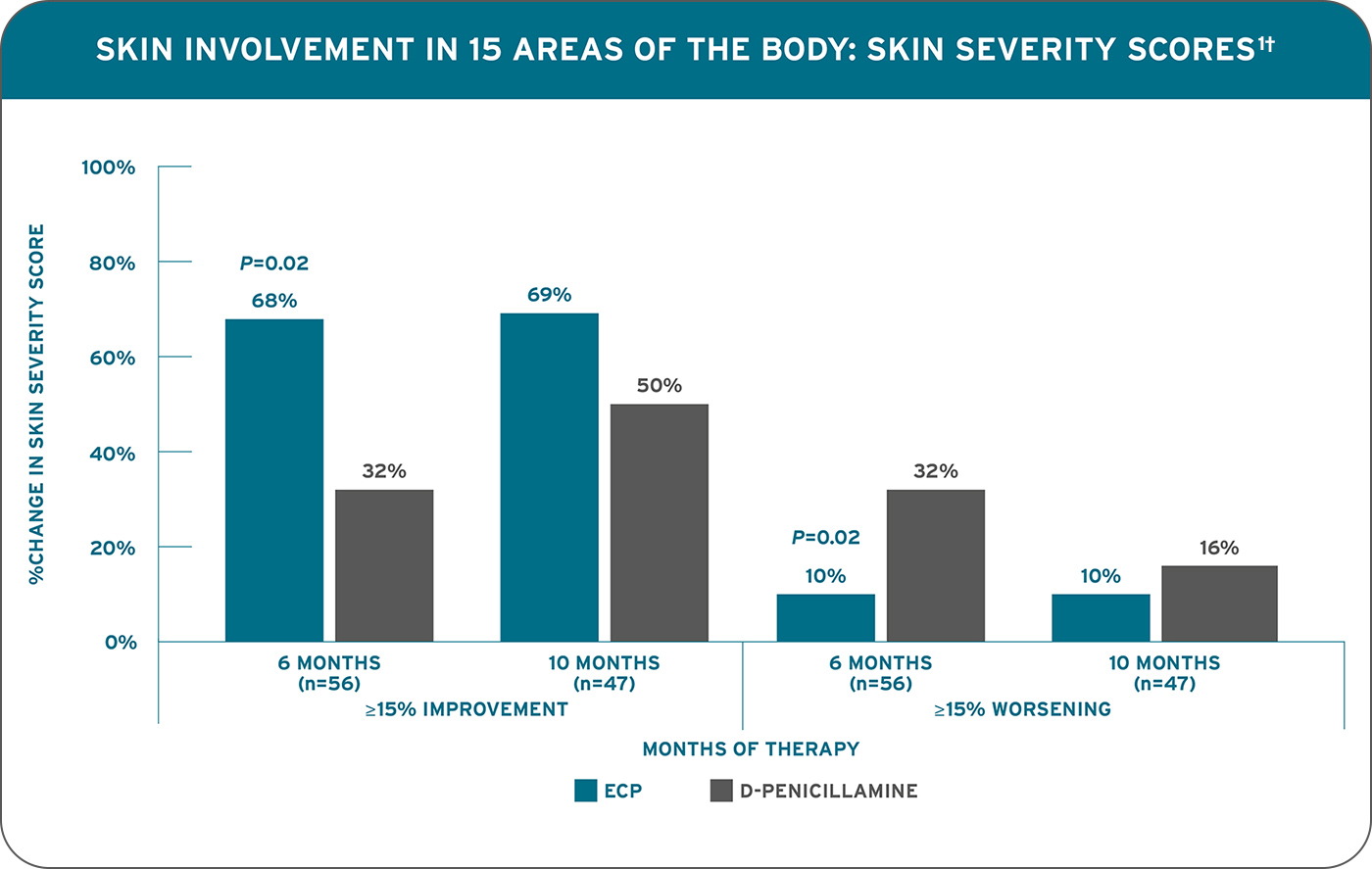
Statistically significant improvement in skin score after 6 months1*
For patients with early-onset, diffuse systemic sclerosis1
THERAKOS® Photopheresis harnesses the patient’s immune system to help treat systemic sclerosis2
*No significant improvement in skin score of ECP compared to D-pen-treated patients was observed at 10 months.1
†A change in the skin score during treatment was considered to be clinically relevant if it differed by at least 15% from baseline.1
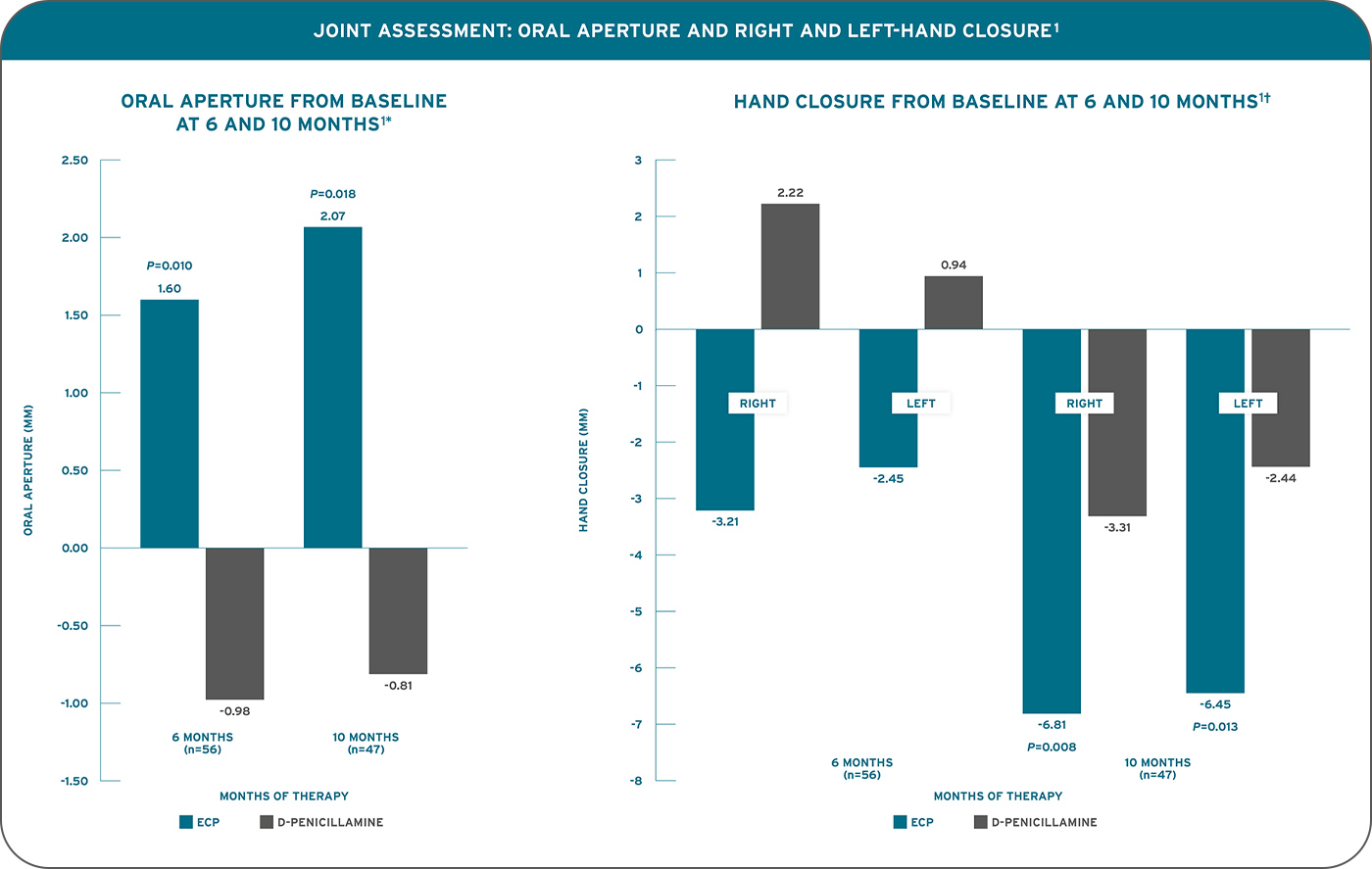
Significant improvement compared to baseline in oral aperture after 6 months and both oral aperture and right/left-hand closure after 10 months1
*No significant improvement in oral aperture of D-pen-treated patients compared to baseline was observed.1
†No significant improvement in hand closure of ECP-treated patients compared to baseline was observed at 6 months. No significant improvement in hand closure of D-Pen-treated patients compared to baseline was observed.1
Rook 1992 Trial Design (N=56): A 10-month randomized, single-blind, controlled trial in patients with recent onset systemic sclerosis. Outcomes included skin score assessed by rating the thickness of the skin on a 0 to 3 scale in 15 areas of the body with possible skin severity scores ranging from 0 to 45 and joints assessed by standardized measurement of the change in oral aperture and right and left-hand closure. All patients had recent onset systemic sclerosis (<4 years duration) and ≥30% progression in site of cutaneous involvement. Patients were randomized 1:1 to receive ECP, 2 consecutive days, every 4 weeks (n=31) or D-penicillamine (n=25), 750 mg/day (the dose was increased by 250 mg every two months until a daily dose of 750 mg/day was reached). Patients were assessed monthly for a minimum duration of 6 months. Collagen production-reducing pharmacologic agents like steroids, colchicine, potassium aminobenzoate, and griseofulvin were not permitted during the study. For treatment of Raynaud’s phenomenon, only stable doses of calcium channel blockers were permitted.1
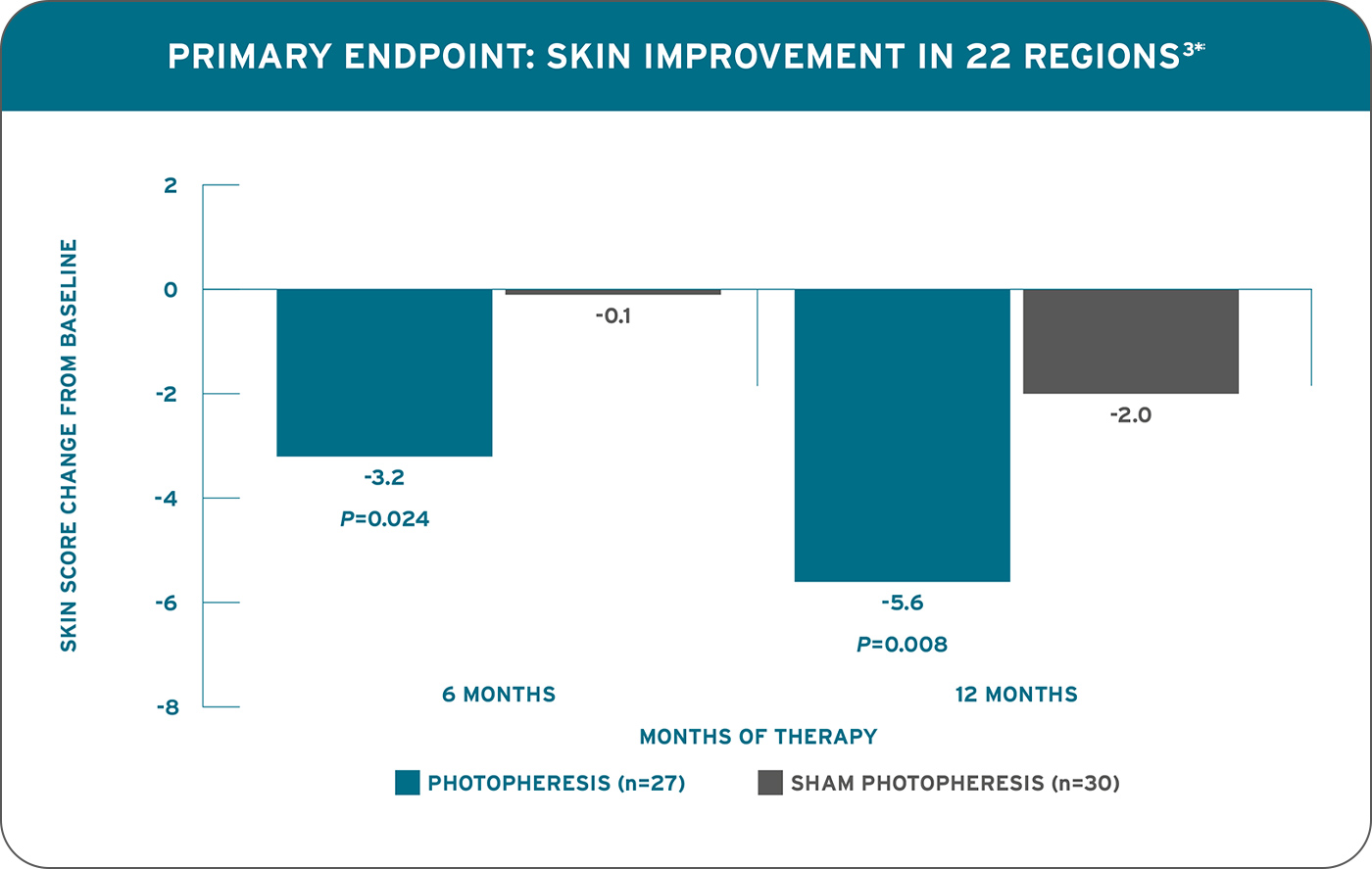
Statistically significant skin improvement from baseline at 6 and 12 months3
*Comparison of skin scores between the two study arms did not achieve statistical significance because of the small sample size of the study arms.3
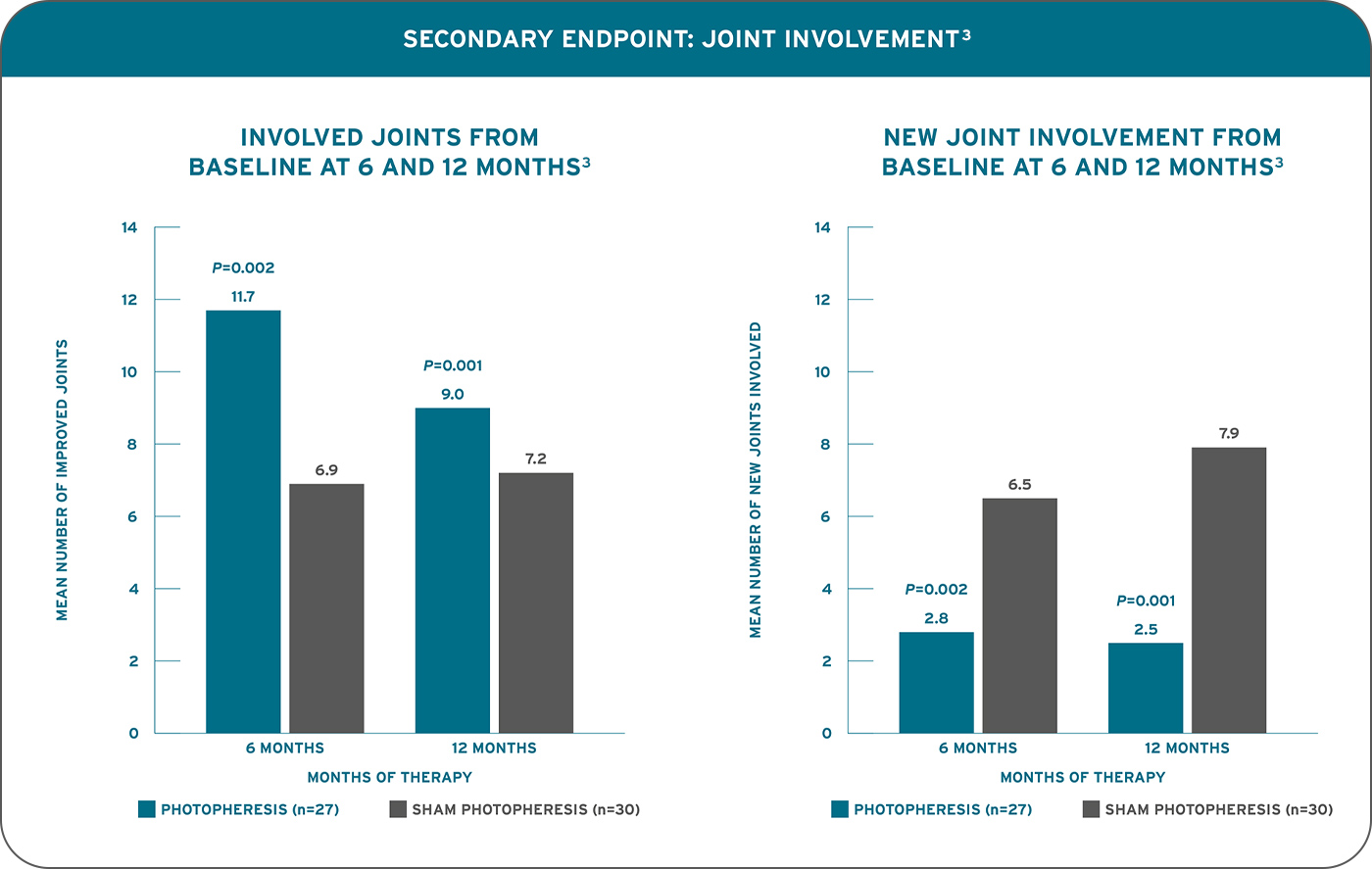
Statistically significant improvement from baseline in a greater number of joints and had fewer new joints become involved after 6 and 12 months3
Knobler 2006 Trial Design (N=57): A 12-month randomized, double-blind, placebo-controlled trial in patients with diffuse systemic sclerosis. The primary endpoint was decrease in skin involvement evaluated by skin score in 22 regions with the modified scleroderma skin scoring method recommended by Kahaleh et al, Clin Exp Rheumatol 1986;4:367-369. The secondary endpoint was change in joint involvement as measured with a goniometer. All patients had diffuse systemic sclerosis and were <2 years from disease onset. Patients were randomized 1:1 to receive Photopheresis, 2 consecutive days, every 4 weeks (n=27) or Sham Photopheresis, 2 consecutive days, every 4 weeks (n=30). Patients were assessed monthly for 12 months. Collagen production-reducing pharmacologic agents, including corticosteroids, colchicine, griseofulvin, and D-pen were not permitted.3
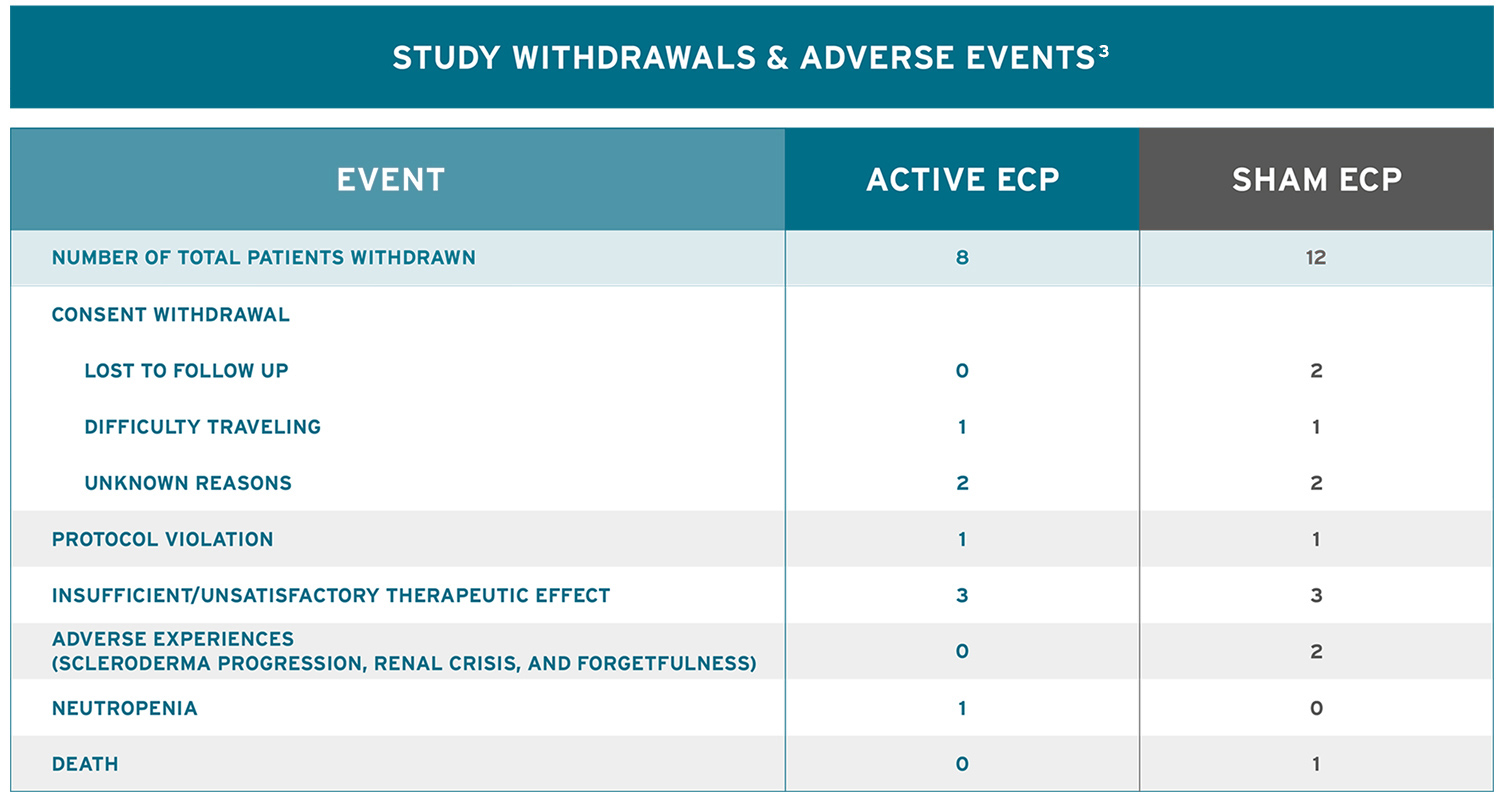
Well-tolerated treatment modality that can help manage systemic sclerosis3
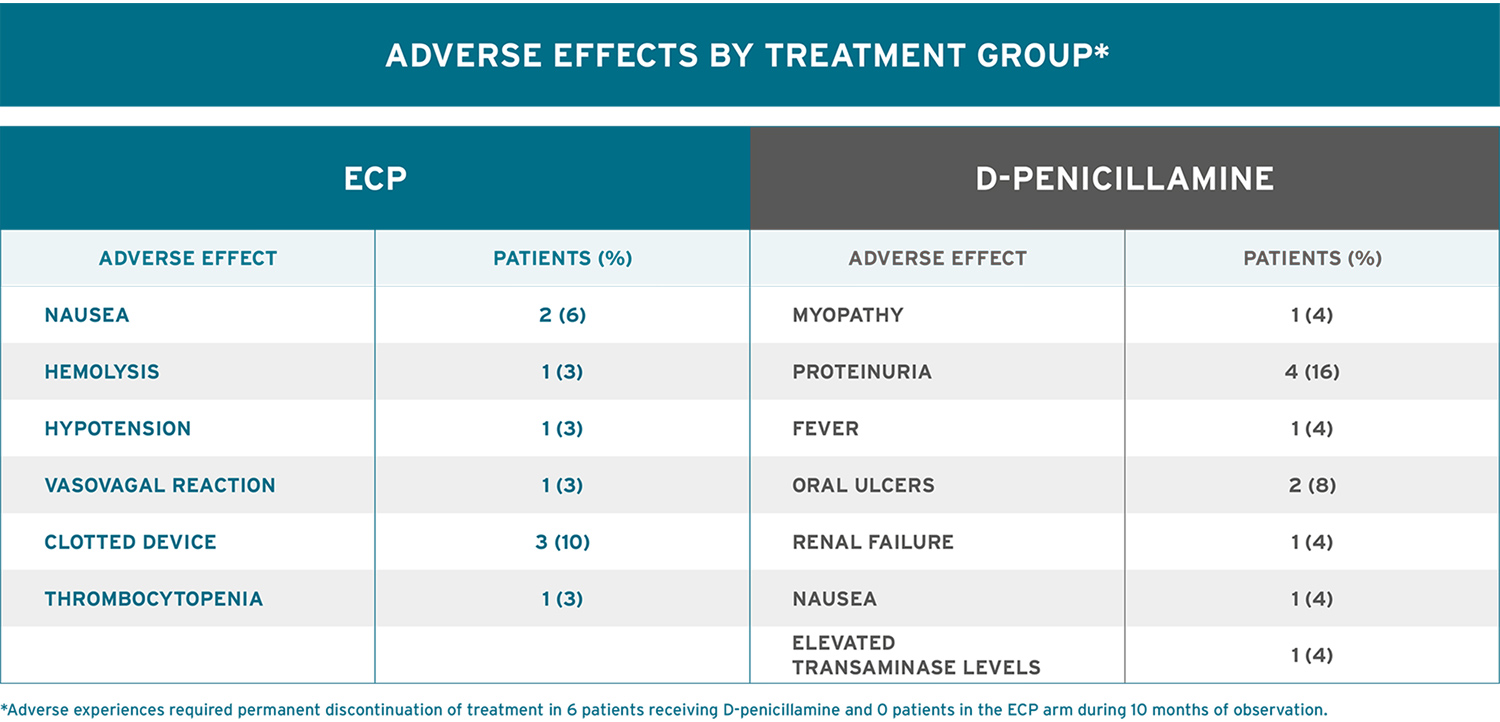
An established tolerability profile3
No serious adverse events and no significant difference in overall adverse events between study arms were reported
References: 1. Rook AH, et al. Arch Dermatol. 1992;128:337-346. 2. Hart JW, et al. Ther Adv Hematol. 2013;4:320-334. 3. Knobler R, et al. J Am Acad Dermatol. 2006;54:793-799

